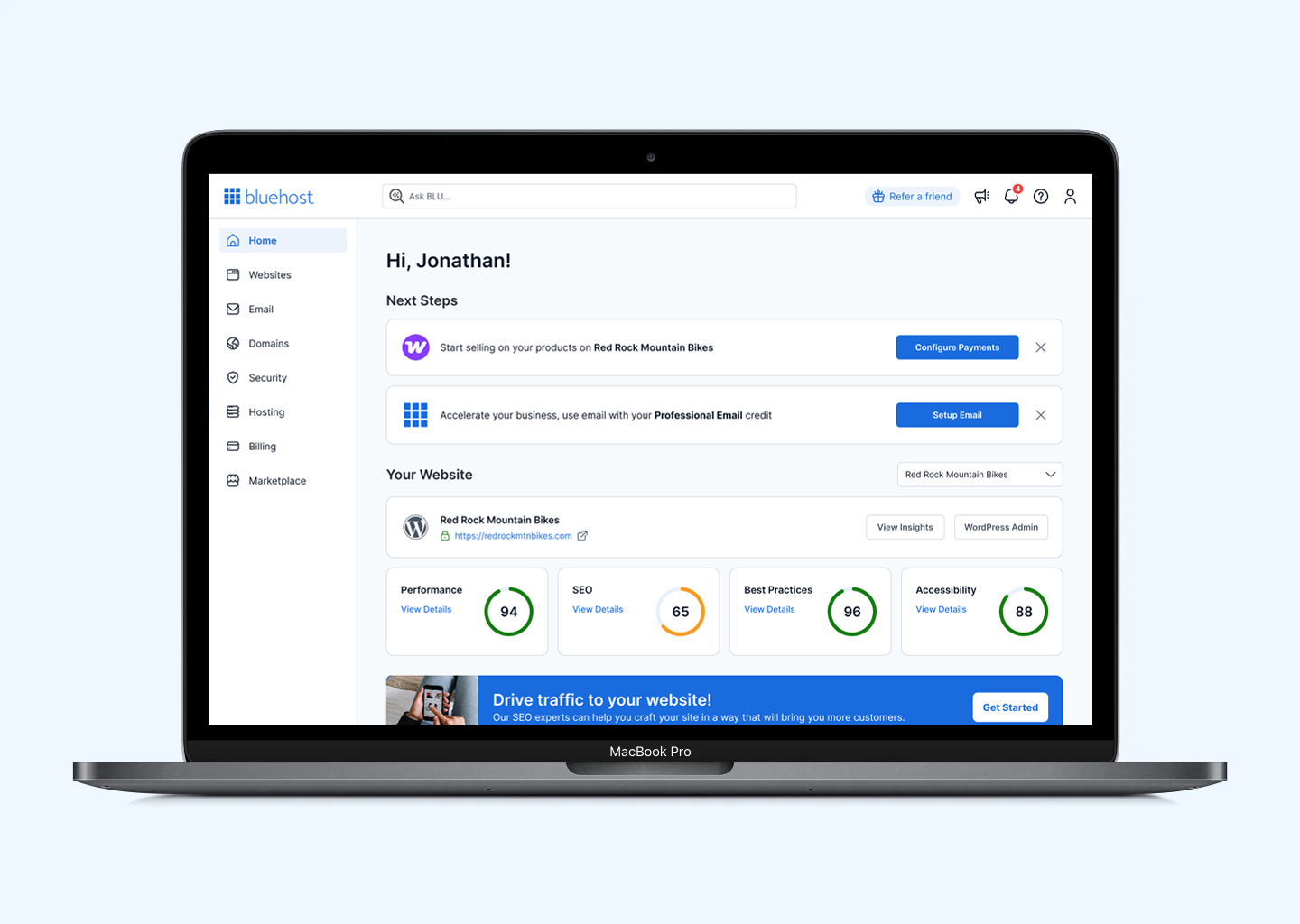
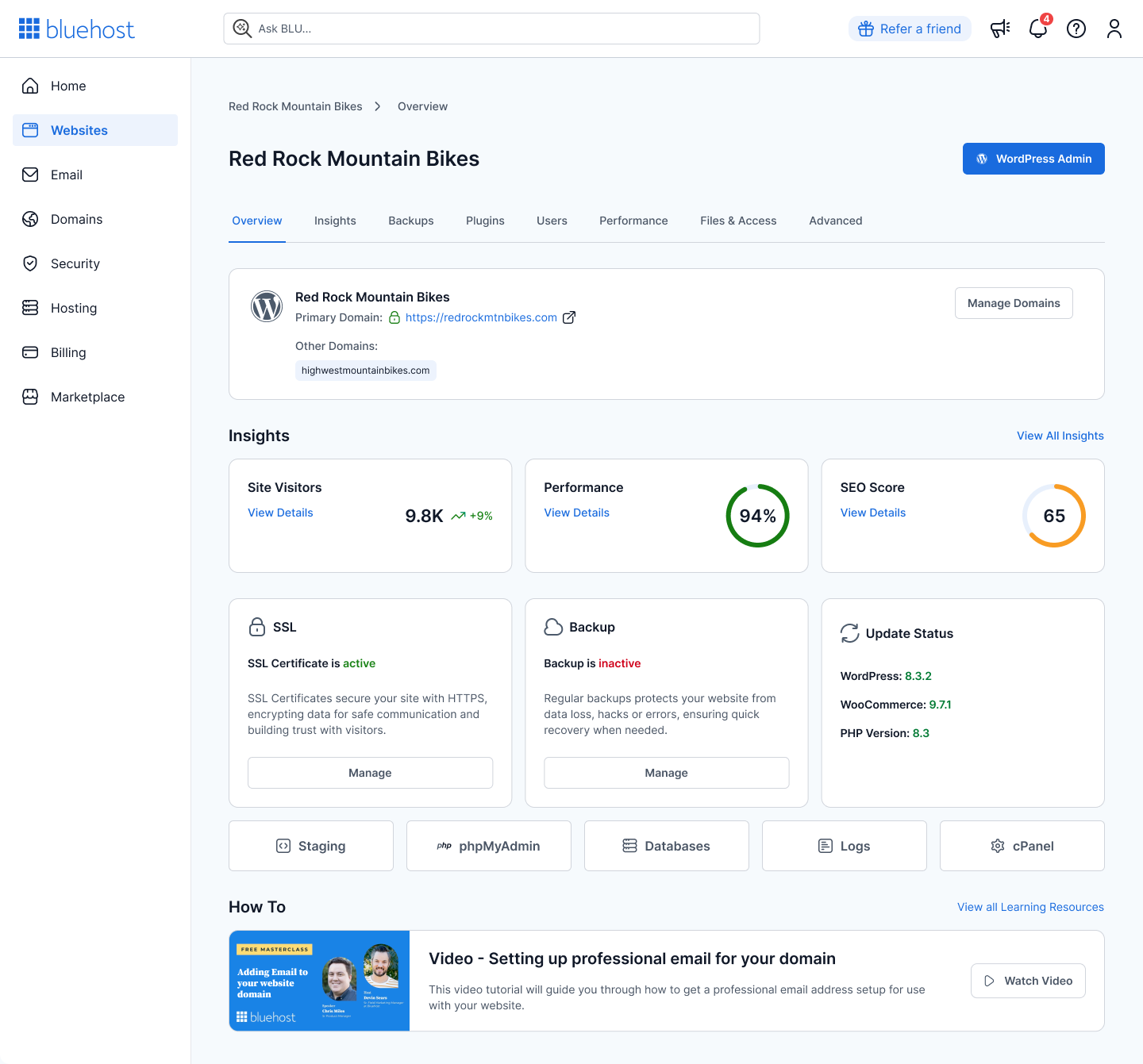
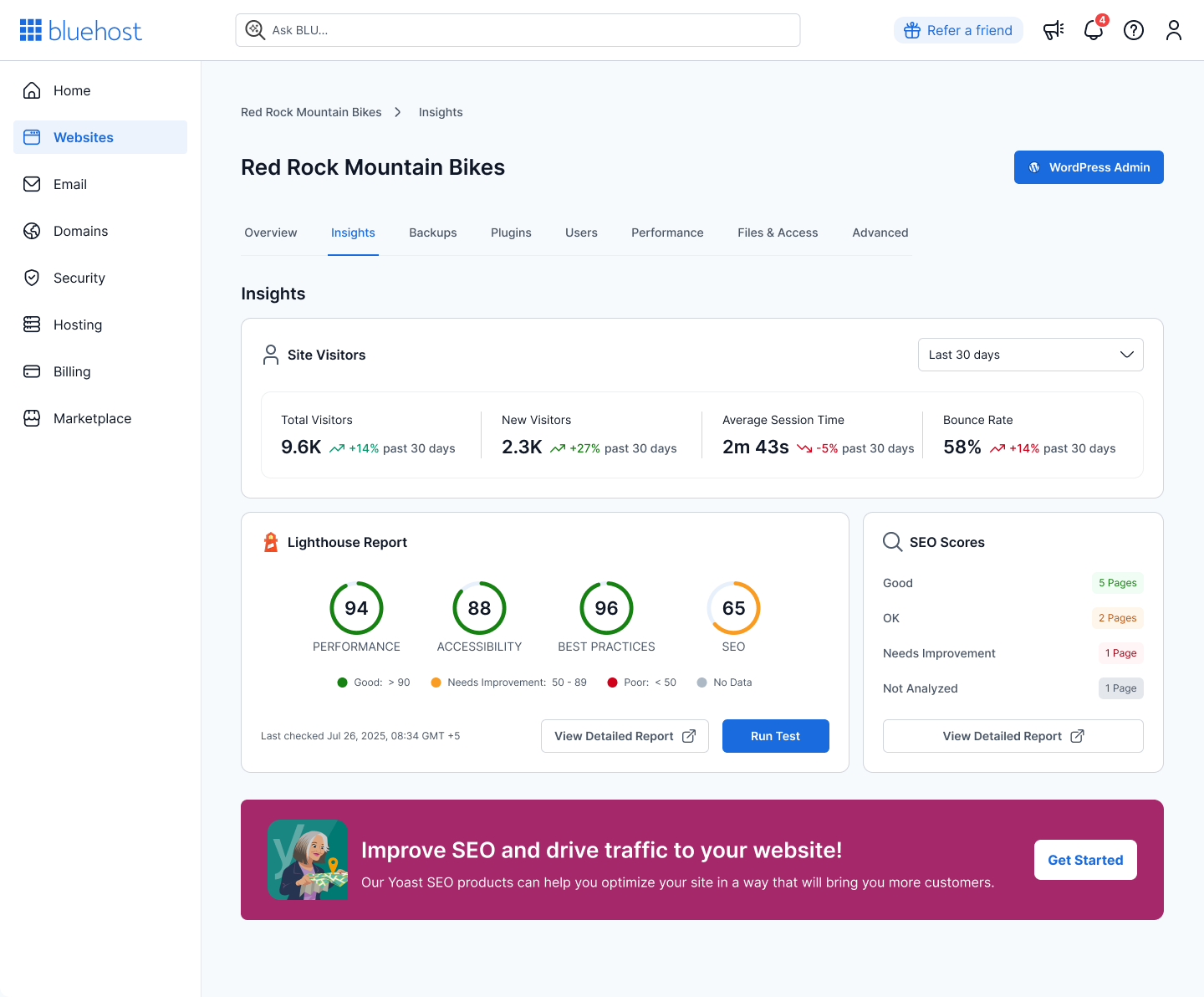
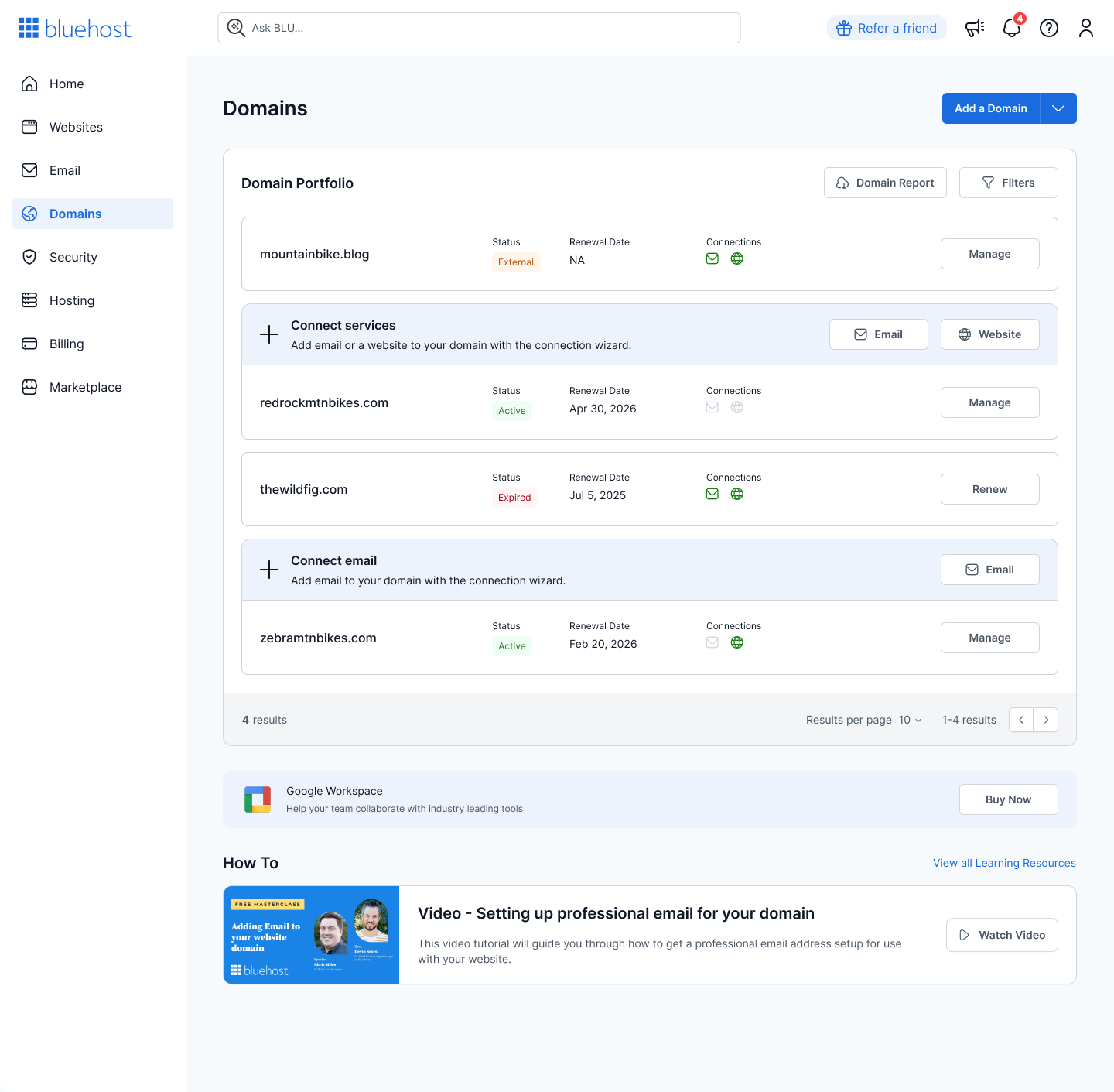
Bluehost was facing a steady rise in customer churn. Complaints pointed to a neglected area of the experience: the post-purchase “back-of-site” portal. Once customers bought hosting, they struggled to manage billing, renewals, and key tools. Confusion turned into cancellations, costing the company millions in lost renewal revenue.
The Team
Cross-functional collaboration across Product Design, Engineering, Product and Customer Support. Designers: Steve Kondris, Jon Lawrence, Aaron Shoemaker, Brad Griffin
My Role
Product Design Manager
Drove alignment across Product, Design, Engineering, and Support
Guided research, strategy, and final design direction
Project Deliverables
Competitor Analysis
IA audit and overhaul
AI Prototypes
High fidelity mocks
Project Challenges
Limited Front End dev resources
Compressed timeline for completion
Early in 2025, I worked with the VP of Product and our Director of Customer Experience to investigate deeper into the cause for the increase of our customer churn rate. Through our analysis we uncovered what we believed to be the smoking gun – post-purchase customer satisfaction had dropped sharply.
We added the Director of Customer Support to our team and began investigating the causes for this drop. We found a large amount of customer feedback that helped us identify the most common points of frustration and obstacles to our customers being successful. The evidence was clear, the back of site customer portal had been ignored for too long and no longer served the current needs of our most prominent customer segments.
We presented our findings to our executive leadership team and were given a green light to tackle this.
An impossible timeline
This project was approved with a very tight deadline – only 3 months to perform all the research, competitive analysis, prototyping, and testing to deliver final screens to engineering for implementation. The customer portal is a very large surface with more than 250 different screens and calls to over a dozen different applications and back-end services.
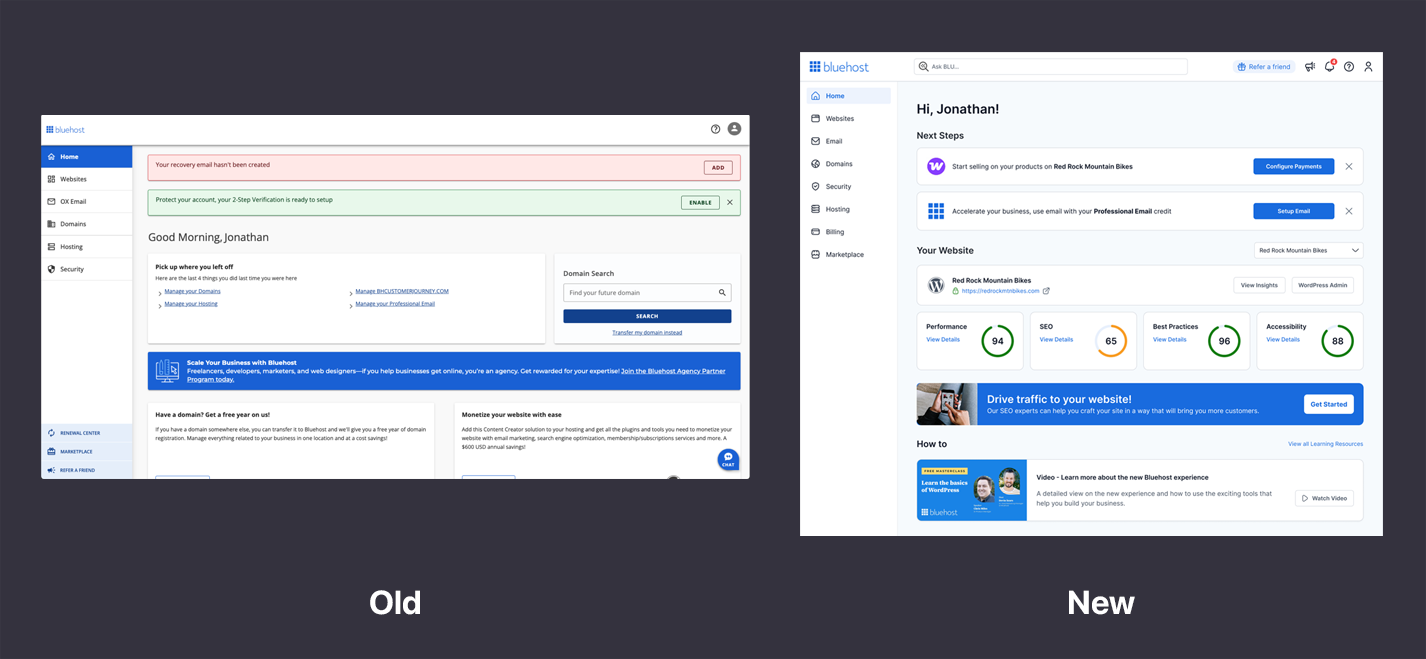
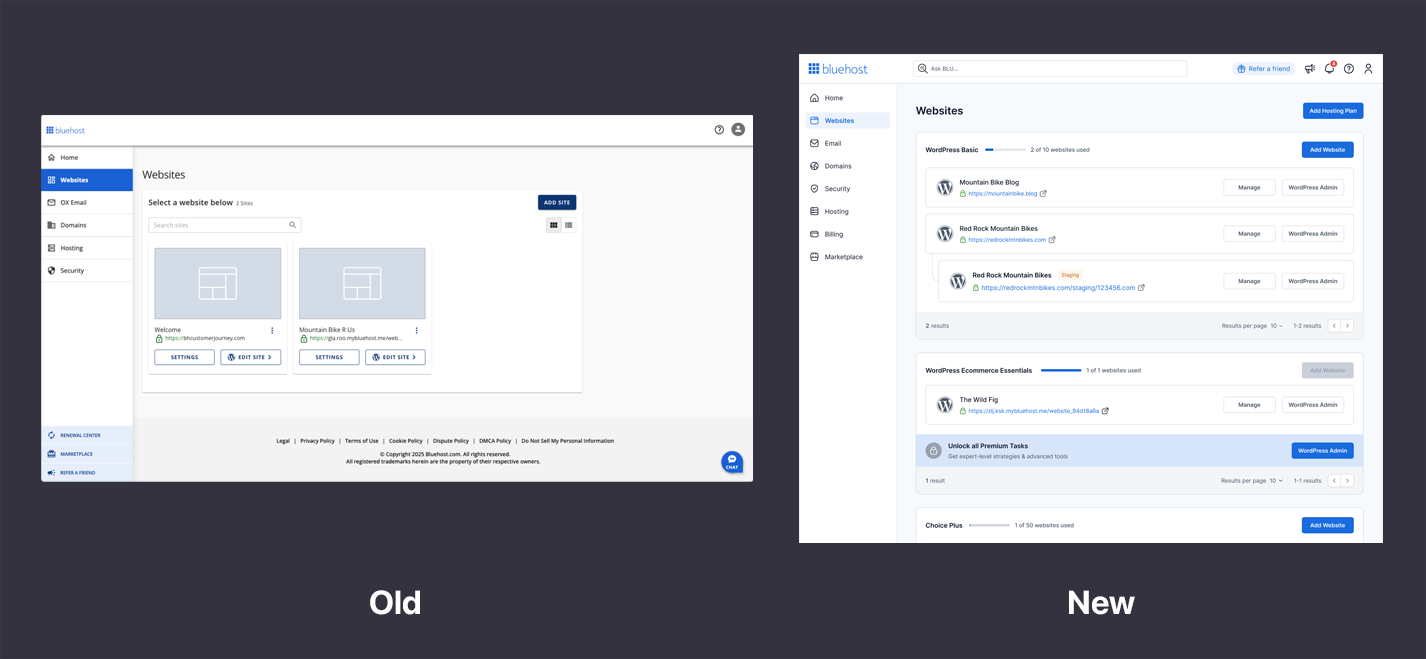
As this experience had not been made a priority for the past few years, it had fallen into a disjointed mishmash of different design patterns and inconsistent user flows. We knew this area had needed attention and were excited to finally get the chance to improve the experience.
Where we focused
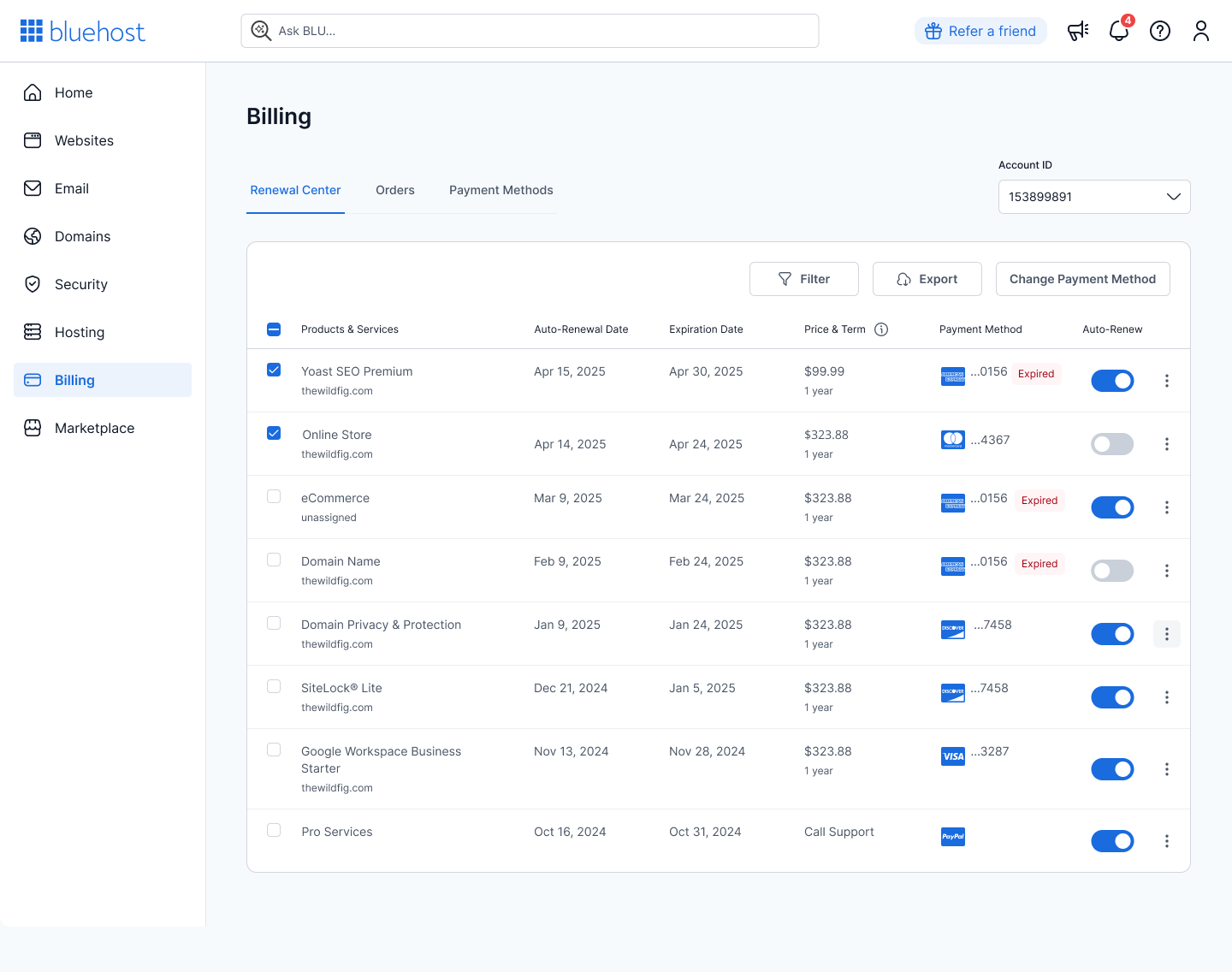
From all of the customer verbatims and the Full-Story recorded user session data we reviewed, it became obvious that the biggest pain point was billing. Customers didn’t understand charges, couldn’t find key actions, and often canceled out of frustration. By reframing the billing and renewal center around clarity and action-oriented CTAs, we reduced related support tickets by 6%.
We also conducted a competitor analysis to identify industry best practices. This helped us validate mental models and avoid reinventing the wheel where established patterns worked.
Learning from our competitors
After understanding all of the gaps in the old experience, we then began to conduct an analysis of all our top competitors and their back of site experiences. This competitor research helped to identify which design patterns and mental models were most common across our industry. We looked especially close at our top competitor who had seen the most growth within the past year to understand how they were presenting their tools and services.
All of this helped to inform our decisions for how to restructure the presentation of our own tools and services.
Accelerating with AI
The scope was enormous, and the design system was inconsistent — three different style eras layered across hundreds of screens. To move quickly, we rebuilt on Tailwind UI, giving us consistent tokens and variables.
With legal blocking use of Figma’s AI features, we turned to lovable.dev for rapid prototyping. Feeding it our updated design system, we generated interactive layouts that were close enough visually to speed up decisions.
For handoff, we used builder.io’s Figma plugin to export production-ready code, saving front-end developers significant time and improving accuracy.
The Results
Despite the scale and timeline, we delivered the full redesign on schedule. The impact was immediate:
4% reduction in customer churn
6% reduction in billing-related support tickets
A unified design system, setting a foundation for future product growth
Why it matters
This project shows how AI can accelerate high-stakes redesigns. By leveraging solid design systems, AI-powered prototyping, and smart engineering handoff, we transformed a neglected experience into a revenue driver — under conditions where success once seemed improbable.